Pokémon Intense Indigo Review: Is It Worth Playing?
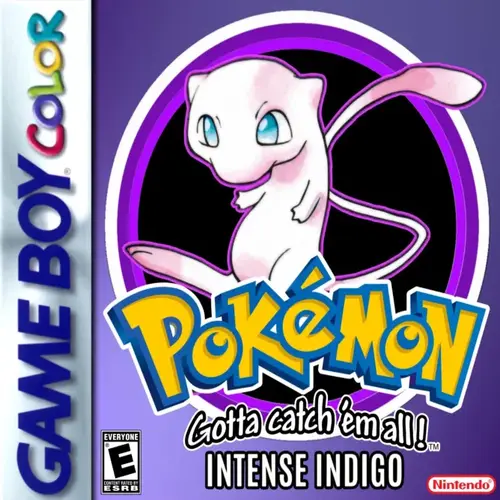
Pokémon Intense Indigo is what happens when someone looks at the already strange battle mechanics of Generation I and decides Pokémon Blue simply is not hostile enough.
Created by SinisterHoodedFigure, the same developer behind Blue Kaizo, Crystal Kaizo, and Emerald Kaizo, Intense Indigo is an extreme-difficulty hack of Pokémon Blue that substantially changes Kanto’s maps, trainer battles, progression, Pokémon availability, story elements, and level curve.
It is also historically important because Intense Indigo was SinisterHoodedFigure’s first ROM hack, predating the Kaizo projects that would eventually become much more famous. Community archival material places its original release on December 21, 2012, with later updates following afterward. citeturn694776reddit20
Despite its age, Intense Indigo received an authorized refresh in 2026.
As of February 18, 2026, SinisterHoodedFigure’s updated version is available with full-color graphics, a choice between Generation I-style and Generation II-style Pokémon sprites, deletable HMs, and additional interface improvements in the Gen II graphics version. The updated patches were released with SinisterHoodedFigure’s permission and remain credited to him as the game’s creator. citeturn824077view0
That makes Intense Indigo much easier to revisit today.
The underlying game is still unapologetically old-school.
The difficulty is still absurd.
Enemy levels eventually go beyond level 100.
The final portions of the game can reach level 127.
And the game expects you to understand Generation I mechanics well enough to survive trainer battles deliberately designed around them.
If that sounds entertaining rather than horrifying, Intense Indigo is absolutely worth experiencing.
Quick Verdict: Is Pokémon Intense Indigo Worth Playing?
Yes—but only for a very specific type of Pokémon player.
Intense Indigo is worth playing if you enjoy extreme difficulty, old-school Generation I mechanics, large-scale team building, and the satisfaction of overcoming battles that initially seem ridiculous.
It is not a good choice if you are looking for a casual Kanto replay.
It is not a good introduction to ROM hacks.
It is definitely not a good introduction to Pokémon.
What makes Intense Indigo interesting is that its difficulty is accompanied by unusually aggressive anti-grinding systems.
Rare Candies are essentially free.
Money becomes abundant.
Pokémon gain experience quickly.
Evolution happens earlier.
Useful items appear earlier.
A dedicated early training area allows rapid leveling.
Repels are available early.
Signs warn you about upcoming trainer levels.
SinisterHoodedFigure’s original description makes the design philosophy clear: Intense Indigo is supposed to be brutally difficult, but the player is given enough money, experience, Pokémon, and preparation tools that the challenge comes primarily from surviving the battles rather than spending fifty hours grinding. citeturn694776youtube22
That philosophy has aged remarkably well.
Pokémon Intense Indigo at a Glance
| Detail | Pokémon Intense Indigo |
|---|---|
| Base Game | Pokémon Blue |
| Platform | Game Boy / Game Boy Color |
| Creator | SinisterHoodedFigure |
| Original Release | December 21, 2012 |
| Latest Authorized Update | February 18, 2026 |
| Region | Heavily altered Kanto-style region |
| Hack Type | Extreme difficulty / challenge hack |
| Pokémon Available | All 151 Generation I Pokémon |
| Maximum Enemy Level | Up to Level 127 |
| Battle System | Generation I |
| Physical/Special Split | No |
| Abilities | No |
| Held Items | No |
| Trade Evolutions | Changed so they can evolve normally |
| Grinding | Heavily accelerated |
| Difficulty | Extreme |
| Beginner Friendly | Absolutely not |
| Nuzlocke Friendly | Possible, but extremely punishing |
| Best For | Experienced Gen I players seeking maximum difficulty |
The original game was already considered one of the hardest Generation I hacks, and even its creator described it as an extremely demanding challenge that would require genuine Generation I skill. citeturn694776search1turn694776youtube22
What Pokémon Intense Indigo Changes From Pokémon Blue
Intense Indigo changes far more than trainer levels.
While it uses Pokémon Blue as its technical foundation, much of the world has been redesigned.
Cities have different names.
Routes, buildings, caves, and dungeons have been altered.
Trainer placement is changed so that many battles become much harder to avoid.
Gym Leaders are different.
Team compositions are different.
Wild Pokémon availability is dramatically expanded.
The plot follows a different variation of the familiar Generation I adventure rather than simply reproducing Blue exactly. citeturn694776reddit20
That immediately separates Intense Indigo from Blue Kaizo.
Blue Kaizo is much more faithful to the structure and story of Pokémon Blue.
Intense Indigo feels like SinisterHoodedFigure experimenting.
That gives the hack a strange personality that later Kaizo games do not quite reproduce.
The Entire Map Has Been Reworked
Kanto is recognizable in spirit, but you should not assume your Pokémon Blue memory will carry you through Intense Indigo.
Caves, routes, cities, and buildings have been redesigned.
Trainer placement is much more deliberate.
Several areas are constructed specifically to make trainer battles mandatory rather than allowing players to casually walk around most opponents.
The game’s original community description notes that maps were intentionally altered to force a much larger percentage of trainer encounters. citeturn694776reddit20
That matters because ordinary trainers are dangerous.
In vanilla Pokémon Blue, most optional trainers are essentially experience points with dialogue attached.
In Intense Indigo, skipping a fight may save resources—but fighting trainers is also one of the ways your Pokémon continue getting stronger.
The game makes travel itself part of the challenge.
Intense Indigo Gets Ridiculously High-Level
This is probably the most famous thing about the hack.
Pokémon levels do not stop at 100.
Enemy trainers can eventually reach level 127, which is the upper practical trainer level used by the game.
SinisterHoodedFigure specifically confirmed level 127 as the highest trainer level in Intense Indigo. citeturn694776youtube22
That immediately sounds unfair.
The important thing is that the player is expected to reach level 100 relatively early compared with normal Pokémon progression.
The creator’s original guidance suggested being around level 100 by the time you reach a major early-to-midgame milestone referred to as Jeff’s house, with much stronger opponents appearing after the second Gym. citeturn694776search1
That sounds insane because it is insane.
But Intense Indigo is not using levels the same way normal Pokémon does.
Level 100 is not the end of progression.
It is effectively part of the middle-game power curve.
Grinding Is Almost Completely De-Emphasized
This is one of Intense Indigo’s smartest design decisions.
Rare Candies cost essentially nothing.
Nuggets can be sold for enormous amounts of money.
Pokémon earn dramatically increased experience.
Early Pokémon evolve sooner.
Evolution stones appear early.
Marts sell useful healing items sooner.
A high-experience training area is available early.
The game even provides effectively unlimited access to money later, allowing players to purchase large quantities of healing items, vitamins, and Rare Candies. citeturn694776youtube22
That completely changes how you should approach the hack.
Do not spend hours grinding because you think suffering through wild Pokémon is part of the intended challenge.
It isn’t.
Use the resources.
Level your team.
Catch alternatives.
Experiment.
The difficult part of Intense Indigo is supposed to be defeating the trainers.
The game actively helps you avoid wasting time on everything surrounding those battles.
All 151 Pokémon Are Obtainable
Intense Indigo lets you obtain all 151 original Pokémon.
That includes species that normally require trading.
Trade evolutions have been changed so Pokémon such as Kadabra, Haunter, Machoke, and Graveler can reach their final forms through normal single-player progression. citeturn694776youtube22
The encounter distribution is also much broader than vanilla Blue.
Useful species become available earlier, and the game deliberately gives players access to a huge range of options so that difficult battles can be solved through team construction.
There is one important balance consideration.
Some of Generation I’s most overwhelming Pokémon are intentionally delayed.
Later documentation for Intense Indigo notes that Pokémon such as Alakazam and Jolteon are restricted until very late in the badge progression because allowing them too early would undermine the intended difficulty. citeturn694776search5
That tells you a lot about the design.
The game wants you to have options.
It does not necessarily want you to have the most broken options immediately.
Generation I Mechanics Matter More Than Ever
You cannot approach Intense Indigo like a modern Pokémon game.
Generation I is weird.
There are no abilities.
There are no held items.
There are no natures.
Special Attack and Special Defense are represented by one combined Special stat.
Physical and special attacks are determined by type.
Critical-hit mechanics behave differently.
Speed influences critical-hit frequency.
Status effects can be incredibly powerful.
The AI operates under completely different rules from modern Pokémon.
And some Pokémon are drastically stronger or weaker than players accustomed to later generations might expect.
Intense Indigo embraces those mechanics rather than replacing them.
That means Generation I knowledge becomes one of your greatest advantages.
If you know why Psychic-types are terrifying in Gen I, why Speed matters so much, how Wrap-style moves can function, and which Pokémon exploit the engine particularly well, you are already better prepared.
If you mostly know Pokémon through modern competitive battling, there will be an adjustment period.
Enemy AI Has Been Deliberately Improved
One thing Intense Indigo does unusually well for a Generation I hack is squeeze more danger out of Pokémon Blue’s primitive AI.
Enemy movesets are rebuilt.
AI subroutines have been modified.
The creator specifically removed some of the famously stupid behavior where trainers waste turns using inappropriate items or obviously useless moves.
Certain trainers are also capable of switching Pokémon, something players do not normally expect from Generation I opponents. citeturn694776youtube22
That does not magically turn Pokémon Blue into a modern competitive engine.
It does make enemies far more threatening than their vanilla counterparts.
A trainer with an optimized moveset becomes dramatically more dangerous when it stops wasting turns.
Every Trainer Is Potentially Dangerous
Intense Indigo is not a game where only Gym Leaders matter.
Ordinary trainer lineups receive substantial modifications and improved coverage.
The game is designed around the assumption that random trainers should still pose a threat rather than merely filling space between bosses.
Later summaries of the hack emphasize that individual trainers use unique lineups with better coverage rather than relying on endless repeated Pokémon. citeturn694776search7
This keeps exploration tense.
In a normal Pokémon game, reaching the next route usually means:
“Great, more experience.”
In Intense Indigo it can mean:
“What fresh nightmare is hiding behind that Youngster?”
Helpful Signs Tell You Upcoming Levels
One of the most player-friendly features is surprisingly simple.
Signs throughout the game warn you about the approximate highest trainer levels in an area.
That prevents one of the worst forms of difficulty-hack design:
walking into an unavoidable battle fifteen levels below the opponent because the game gave you no information.
SinisterHoodedFigure deliberately added these warnings so players could prepare before entering especially dangerous areas. citeturn694776youtube22
Pay attention to them.
Intense Indigo is difficult enough when you know what level range is coming.
There is no reason to make it harder by ignoring the warnings.
HMs Are Less Annoying Than You Might Expect
Despite being based on Pokémon Blue, Intense Indigo reduces some of the worst HM-related friction.
The game minimizes the number of times several field moves are actually necessary.
Later versions only require Cut once, Flash once, and Strength twice, while Surf remains the most commonly required HM—which is considerably less annoying because Surf is actually an excellent battle move. citeturn694776search5
The 2026 update improves this further by making HMs deletable. citeturn824077view0
That is particularly valuable in Generation I, where carrying unwanted field moves can otherwise permanently damage a Pokémon’s moveset until you reach appropriate removal options.
Several Annoying Vanilla Puzzles Are Removed
Intense Indigo’s difficulty is focused mostly on Pokémon battles.
That means some aggravating non-battle obstacles from the original games are reduced or removed.
The infamous Lt. Surge trash-can switch puzzle, for example, is no longer required in the same way.
This is a surprisingly important design philosophy.
A difficult trainer battle asks:
“Can you solve this Pokémon problem?”
A random switch puzzle asks:
“Would you like to check garbage cans until the game decides you are allowed to continue?”
Intense Indigo largely prefers the first kind of pain.
The Elite Four Has Been Replaced by a Tournament Concept
One of Intense Indigo’s strangest structural changes appears near the end of the game.
Rather than simply reproducing the traditional Elite Four exactly, the game uses a 32-bracket tournament concept leading into five final battles.
The teams are deliberately less predictable than traditional monotype Elite Four lineups. citeturn694776youtube22
That is a great fit for the game.
Traditional Elite Four themes make preparation relatively straightforward.
If you know Lorelei uses Ice, Bruno uses Fighting, Agatha uses Ghost, and Lance uses Dragon, you can build around those expectations.
Intense Indigo wants the final challenge to be harder to reduce into four obvious matchup puzzles.
The tournament structure helps accomplish that.
The 2026 Full-Color Update Is a Big Improvement
The February 18, 2026 update makes Intense Indigo considerably more pleasant to revisit.
The game can now be played in full color while preserving either Generation I-style sprites or using Generation II-style sprites.
The Gen II graphical option also includes additional interface features such as a caught indicator and EXP bar.
HMs are deletable in the updated release. citeturn824077view0
These changes do not alter the fundamental battle design.
Intense Indigo is still Intense Indigo.
But presentation matters.
Playing a difficult game for dozens of hours is much more enjoyable when the interface gives you useful information and the world is no longer limited to the original monochrome presentation.
For most players starting today, I would choose the updated color version.
Is Pokémon Intense Indigo Good for Beginners?
No.
Not even slightly.
If you have never played Generation I Pokémon, do not start here.
If you have never played a ROM hack, do not start here.
If you have never played a difficulty hack, I would probably not start here either.
Intense Indigo assumes you can deal with the quirks of Generation I while also managing extreme enemy levels and carefully constructed trainer teams.
This is a game for people who already know Pokémon and actively want resistance.
Blue Kaizo itself is generally considered extremely difficult.
Players familiar with both have repeatedly described Intense Indigo as even harder. citeturn694776reddit18turn694776search5
That tells you everything you need to know.
Difficulty and Best First-Playthrough Setup
The best first Intense Indigo playthrough is a normal playthrough.
Do not Nuzlocke it first.
Do not add artificial level restrictions.
Do not decide Rare Candies are “cheating.”
Use the systems the game provides.
The creator intentionally made Rare Candies cheap.
The creator intentionally gives you large amounts of money.
The creator intentionally increases EXP.
These systems exist because you are supposed to build and rebuild teams quickly.
Use them.
Catch lots of Pokémon.
Keep alternatives available.
Pay attention to trainer-level signs.
And save before major fights.
There is more than enough challenge here without inventing additional punishment.
Intense Indigo vs Blue Kaizo
This is the obvious comparison.
Both use Pokémon Blue.
Both were created by SinisterHoodedFigure.
Both are extremely difficult.
But they have different identities.
Blue Kaizo stays much closer to the original Pokémon Blue structure and story.
Intense Indigo is more experimental.
Maps are more heavily changed.
Cities have altered identities.
The storyline differs more.
Trainer routing is constructed differently.
The level curve becomes dramatically more extreme.
Intense Indigo also contains more deliberate anti-frustration features surrounding its difficulty.
The original creator even promoted it as harder than Blue Kaizo while simultaneously trying to make grinding and preparation less annoying. citeturn694776youtube22
For historical importance, Blue Kaizo is more famous.
For sheer Generation I insanity, Intense Indigo may be the more interesting game.
Intense Indigo vs Yellow Kaizo
Yellow Kaizo is much newer and much more polished.
Its 2026-era design includes a better interface, extensive quality-of-life improvements, difficulty options, dedicated Nuzlocke support, bug fixes, and more modernized presentation.
Intense Indigo is stranger.
It feels like an early experiment from someone discovering exactly how far Generation I could be pushed.
If you want the most refined SinisterHoodedFigure Generation I experience, I would choose Yellow Kaizo.
If you want something historically fascinating and utterly unhinged, Intense Indigo has a unique appeal.
The fact that enemy levels reach 127 should tell you which game is less interested in behaving normally.
How Long Does Pokémon Intense Indigo Take to Beat?
Intense Indigo’s actual map and storyline are not enormous compared with later Pokémon games.
The difficulty is what extends playtime.
A first playthrough can reasonably take 30 to 50 hours, although experience varies enormously depending on Generation I knowledge, how freely you use Rare Candies, how often major battles require retries, and how much team experimentation you do.
Someone stubbornly grinding Pokémon manually will take much longer.
Do not do that.
The game explicitly gives you systems designed to accelerate leveling.
Use them.
A challenge run or Nuzlocke is impossible to estimate meaningfully because repeated resets can turn the game into a much larger project.
Pokémon Intense Indigo Pros and Cons
| Pros | Cons |
| Extremely challenging Generation I battles | Far too difficult for most players |
| All 151 Pokémon obtainable | Generation I mechanics can feel archaic |
| Excellent anti-grinding systems | Enemy levels reaching 127 can feel absurd |
| Cheap Rare Candies and abundant money | Not remotely beginner friendly |
| Improved enemy movesets and AI behavior | Requires strong knowledge of old mechanics |
| Heavily redesigned maps | Familiar Kanto knowledge is less useful |
| Altered storyline and Gym structure | Some players may prefer Blue Kaizo’s more familiar progression |
| Earlier evolutions and useful items | Balance can feel extreme |
| Trainer-level warning signs | Ordinary trainers can become exhausting |
| Trade evolutions work in single-player | No modern abilities, held items, or physical/special split |
| 2026 full-color version | Still fundamentally a very old ROM hack |
| Gen II sprite option with EXP bar and caught indicator | Quality-of-life remains limited compared with newer hacks |
| Deletable HMs in current update | Extreme difficulty is the primary attraction |
| Historically important first SHF hack | Players looking for story-first content should look elsewhere |
Intense Indigo’s greatest strength is commitment.
It knows exactly what it wants to be.
Its greatest weakness is also commitment.
If you do not enjoy that style of difficulty, the game offers very little reason to force yourself through it.
Is Pokémon Intense Indigo Good for Nuzlockes?
For experienced challenge players, it can be fascinating.
For everyone else, no.
Intense Indigo is difficult enough without permanent death.
Trainer teams are dangerous.
Levels are extreme.
The altered maps make routing unfamiliar.
Generation I mechanics can produce enormous swings in battle outcomes.
The game also predates the modern era of ROM hacks being designed around formalized Nuzlocke rules.
That makes it fundamentally different from something such as Platinum Kaizo, where level caps, encounter management, and challenge-run conventions are built directly into the design.
Intense Indigo can certainly be Nuzlocked.
That does not mean it was built to gently facilitate one.
If you are determined to try, beat the game normally first.
Learn the maps.
Learn the bosses.
Learn which Pokémon become available when.
Then decide whether you want to attach permanent consequences to every mistake.
Is Pokémon Intense Indigo Still Worth Playing in 2026?
More than it was a few years ago.
The authorized 2026 update is the main reason.
Full-color presentation immediately makes the game more approachable.
The choice between Generation I and Generation II-style sprites gives players some control over presentation.
The optional Gen II graphics provide useful additions such as an EXP bar and caught indicator.
Deletable HMs remove one more frustrating Generation I restriction. citeturn824077view0
None of this makes the hack modern.
It does make an old hack substantially easier to recommend today.
There is also historical value.
Intense Indigo gives you a look at SinisterHoodedFigure before Blue Kaizo, Crystal Kaizo, and Emerald Kaizo defined his reputation.
You can see many of the same ideas forming:
strong trainer teams;
expanded Pokémon availability;
limited grinding;
modified AI;
dangerous ordinary trainers;
and a willingness to push official Pokémon mechanics much further than Game Freak ever intended.
Who Should Play Pokémon Intense Indigo?
Play Intense Indigo if you:
love Generation I;
already find normal Pokémon trivial;
enjoy SinisterHoodedFigure’s other hacks;
want something even more extreme than Blue Kaizo;
like building large rotating teams;
enjoy learning old battle mechanics;
do not mind repeated boss attempts;
or want to experience an important early difficulty hack.
It is especially interesting for players who enjoy ROM hack history.
Intense Indigo shows an influential creator experimenting with many of the ideas that later became associated with the Kaizo style.
You should probably skip it if you mainly want:
modern mechanics;
a relaxing adventure;
a story-focused ROM hack;
later-generation Pokémon;
abilities;
held items;
the physical/special split;
or a beginner-friendly difficulty curve.
Intense Indigo is not trying to provide any of those things.
What Should You Know Before Starting?
First, make sure you are using the current Intense Indigo patch intended for Pokémon Blue.
The authorized 2026 repository specifically identifies Blue as the correct base game for both Blue Kaizo and Intense Indigo. citeturn824077view0
Second, use the modernized color version unless you specifically want the original presentation.
Third, Rare Candies are part of the intended progression.
Use them.
Fourth, pay attention to signs warning you about enemy levels.
Fifth, catch a lot of Pokémon.
Your PC is part of your team.
Six permanent favorites are going to make your life much harder.
Sixth, remember that Generation I mechanics are bizarre.
Do not assume modern Pokémon logic applies.
Finally, expect to lose.
This is not Pokémon Blue with slightly tougher Gym Leaders.
It is one of the most extreme Generation I difficulty hacks ever made.
That is the point.
Final Recommendation
Pokémon Intense Indigo is weird, brutal, historically important, and surprisingly thoughtful.
At first glance, the game sounds like exactly the kind of difficulty hack I usually criticize.
Enemy levels reach 127.
Random trainers are dangerous.
Maps force encounters.
The game expects you to reach level 100 absurdly early.
Everything sounds excessive.
Then you look at how the rest of the game is constructed.
Rare Candies cost almost nothing.
Money is abundant.
Experience is accelerated.
Pokémon evolve sooner.
Evolution stones appear early.
Useful items are accessible.
All 151 Pokémon can be obtained.
Trade evolutions are fixed.
Signs tell you what level of danger is ahead.
Annoying HM usage is reduced.
Several frustrating vanilla puzzles are removed.
And the modern update even adds full color and deletable HMs.
That combination reveals what Intense Indigo is actually trying to do.
It does not want to waste your time.
It wants to destroy you efficiently.
That distinction matters.
There are far more polished difficulty hacks available today.
Yellow Kaizo is a much smoother Generation I experience.
Emerald Kaizo is much more famous.
Platinum Kaizo is built around years of modern challenge-run design.
But none of them quite replace Intense Indigo.
This is SinisterHoodedFigure’s first hack—a strange experiment that pushes Pokémon Blue beyond level 100, rebuilds Kanto around unavoidable trainers, and gives you effectively unlimited leveling resources because grinding is apparently too merciful.
It is not for everyone.
It may not even be for most people.
But if you genuinely enjoy extreme Pokémon difficulty, Intense Indigo deserves to be played at least once.
Especially now that the authorized 2026 update has made it easier to enjoy without sacrificing the absurdity that made the original memorable.
If Blue Kaizo is Generation I turned hostile, Intense Indigo is Generation I after somebody removed the safety regulations entirely.
And somehow, against all reasonable judgment, that can be a lot of fun.