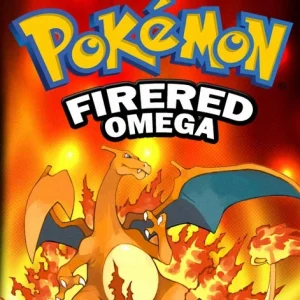
Pokémon FireRed Omega Review: Is It Worth Playing?
Pokémon FireRed Omega is one of the most historically important Pokémon difficulty hacks, even if it looks surprisingly simple compared with the ROM hacks players have access to today.
Created by Drayano, FireRed Omega takes Pokémon FireRed and rebuilds the Kanto adventure around a much larger selection of Pokémon, considerably stronger trainers, altered evolutions, changed movesets, buffed weaker species, and several pieces of new postgame content.
It does not add Mega Evolution.
It does not have the Fairy type.
It does not have the modern physical/special split.
It does not provide a giant difficulty-selection menu, reusable TMs, a portable PC, built-in level caps, or hundreds of later-generation Pokémon.
FireRed Omega predates almost all of that.
Drayano originally released the project in 2009, describing its main goal as allowing far more variety by making Pokémon from all three existing generations available while changing trainer teams and adding new events and areas. citeturn188436youtube31
That makes FireRed Omega fascinating to revisit today.
Many ideas that later became signatures of Drayano hacks are already here.
Expanded Pokémon availability.
Harder Gym Leaders.
Altered trade evolutions.
Buffs for weak Pokémon.
Better movesets.
More interesting wild encounters.
New legendary content.
A familiar official game that still feels familiar after being substantially improved.
FireRed Omega is clearly an early version of the formula that eventually produced Sacred Gold, Storm Silver, Blaze Black, Volt White, and Renegade Platinum.
The question is whether that makes it historically interesting or still genuinely fun to play.
The answer is both—but with some important caveats.
Quick Verdict: Is Pokémon FireRed Omega Worth Playing?
Yes, Pokémon FireRed Omega is still worth playing if you want a straightforward, old-school enhancement of Pokémon FireRed.
The hack works best for players who like Kanto and want a harder version of the original adventure without transforming FireRed into something unrecognizable.
Its strongest improvements are remarkably straightforward.
Wild Pokémon have been redistributed throughout Kanto.
The available roster extends across the first three generations.
Gym Leaders, Giovanni, and the Elite Four use full teams of six.
Important Pokémon have altered movesets and evolution methods.
Several weaker species have been buffed.
New areas and postgame events have been added.
The problem is that FireRed Omega’s age is impossible to ignore.
Modern hacks such as Radical Red offer vastly more Pokémon, modern battle mechanics, reusable TMs, difficulty settings, extensive quality-of-life systems, and sophisticated team-building tools.
FireRed Omega does not compete with those hacks feature for feature.
It should not try to.
Its appeal is much simpler:
FireRed, expanded and substantially harder.
If that is what you want, FireRed Omega remains surprisingly enjoyable.
Pokémon FireRed Omega at a Glance
| Detail | Pokémon FireRed Omega |
|---|---|
| Base Game | Pokémon FireRed |
| Platform | Game Boy Advance |
| Creator | Drayano |
| Original Release | 2009 |
| Region | Kanto / Sevii Islands |
| Hack Type | Enhancement / difficulty hack |
| Pokémon Roster | Generations I–III |
| National Dex | Given immediately with the Pokédex |
| Starter Pokémon | Smoochum, Elekid, or Magby |
| Gym Leader Teams | Six Pokémon |
| Physical/Special Split | No |
| Fairy Type | No |
| Trade Evolutions | Many changed to single-player methods |
| Difficulty | Moderate to High |
| Beginner Friendly | Reasonably, for experienced Pokémon players |
| Nuzlocke Difficulty | High |
| Best For | Players wanting an old-school harder FireRed experience |
FireRed Omega is generally identified as one of Drayano’s earliest major enhancement hacks. Its original feature list emphasizes expanded Pokémon variety, stronger trainers, new events, altered encounters, and additional areas rather than the huge engine modifications associated with modern ROM hacking. citeturn188436youtube31turn438406search0
What Pokémon FireRed Omega Changes From FireRed
FireRed Omega does not fundamentally change the Pokémon FireRed story.
You still begin in Pallet Town.
You still explore Kanto.
You still battle Team Rocket.
You still earn eight Gym Badges.
You still challenge the Indigo Plateau.
You still travel through the Sevii Islands.
The biggest changes happen around that structure.
Almost every wild encounter table has been altered.
Trainer parties have changed.
Levels are higher.
Gym Leaders have complete teams.
Evolution methods have been modified.
Movesets have been adjusted.
Certain Pokémon have better stats or abilities.
Fishing has been overhauled.
New areas appear in the late game.
The result is recognizably FireRed, but the familiar path through Kanto no longer produces the same familiar teams and battles. citeturn438406search0turn438406search1
That makes FireRed Omega particularly good for someone who has replayed FireRed enough times to know exactly what is around every corner.
You know Kanto.
You just do not completely know this Kanto.
Smoochum, Elekid, and Magby Replace the Kanto Starters
One of FireRed Omega’s most memorable changes happens immediately.
Bulbasaur, Charmander, and Squirtle are gone from Professor Oak’s table.
Instead, you choose between:
Smoochum
Elekid
Magby
That is a wonderfully strange starter trio.
They are Pokémon most players rarely build an entire playthrough around because the official games often make them inconvenient or relatively late acquisitions.
FireRed Omega puts one in your hands immediately.
Drayano also modified their stats, abilities, movesets, and evolution levels to make them better suited to the role.
Smoochum, Elekid, and Magby each receive increases to their base stats and evolve at level 24 rather than level 30. Their evolutions—Jynx, Electabuzz, and Magmar—also receive stat increases, while the lines gain altered abilities and heavily modified level-up movesets. citeturn438406search0turn438406search2
This means choosing Magby is not equivalent to simply hacking a level 5 Magby into vanilla FireRed.
The starter lines were deliberately rebuilt to function as starters.
It is one of the most distinctive parts of the entire hack.
What Happened to Bulbasaur, Charmander, and Squirtle?
They are still obtainable.
FireRed Omega distributes the traditional starter Pokémon from Kanto, Johto, and Hoenn through NPC gifts during the adventure.
Drayano’s original documentation specifically encourages players to speak with new NPCs in Pokémon Centers and towns because some will provide starter Pokémon.
The Hoenn starters become available first, followed by the Johto starters and eventually the original Kanto trio. citeturn438406search1
This creates an interesting reversal.
Instead of beginning with Charmander and hoping to eventually find something unusual, you begin with something unusual and gradually collect the traditional starters later.
It also encourages exploration.
In vanilla FireRed, experienced players can safely ignore enormous numbers of NPCs because they already know which ones matter.
FireRed Omega gives you a reason to talk to people again.
The Pokémon Roster Is Dramatically Expanded
The main goal behind FireRed Omega was increased team variety.
Wild encounters across grass, caves, Surfing areas, and fishing locations were extensively redesigned to distribute Pokémon from across Generations I through III throughout the adventure.
The National Pokédex is also provided as soon as you receive the Pokédex rather than being locked behind late-game progression. citeturn438406search0turn438406search1
This was a huge feature in 2009.
Today, almost every major enhancement hack advertises a massive Pokédex.
At the time, being able to build Kanto teams from the broader 386-species Generation III roster dramatically changed FireRed.
You might use a Hoenn Pokémon before reaching Misty.
A Johto species may fill a team role you normally reserve for something from Kanto.
Routes you have walked through dozens of times suddenly contain Pokémon you would never expect to find there.
The change sounds ordinary now because FireRed Omega helped normalize it.
Fishing Is Actually Useful
FireRed Omega also pays unusual attention to fishing.
The Old Rod is obtained much earlier, in Viridian City.
The Good Rod moves to Vermilion City.
More importantly, the Old Rod does not simply exist as a Magikarp delivery device.
Early fishing locations contain a broader selection of useful Water Pokémon, while later fishing areas similarly make better use of the Good Rod.
Small grass patches were also added to several towns, including Viridian, Vermilion, Celadon, and Cerulean, specifically to create additional encounter opportunities. citeturn438406search0turn438406search1
This is exactly the sort of change Drayano became known for.
The goal is not simply to say:
“All these Pokémon technically exist somewhere.”
The goal is to make them available at points where the player might actually use them.
Gym Leaders Have Full Teams of Six
This is where FireRed Omega’s difficulty becomes obvious.
Every Gym Leader uses six Pokémon.
Giovanni’s major battles also feature six Pokémon.
The Elite Four similarly receive full teams. citeturn438406search1
Compare that with vanilla FireRed.
Brock has two Pokémon.
Misty has two.
Lt. Surge has three.
Erika has three.
Koga has four.
Sabrina has four.
FireRed Omega immediately changes the scale of those fights.
A six-Pokémon Gym battle gives the opponent far more opportunities to cover weaknesses and punish simplistic strategies.
You cannot necessarily bring one super-effective attacker and expect it to cleanly sweep an entire Gym.
That is the basic Drayano philosophy in embryonic form.
Keep the Gym Leader’s identity.
Give them enough Pokémon to actually express it.
FireRed Omega Is Harder Than FireRed
Much harder.
Levels are generally increased throughout the game, and trainer teams are significantly improved.
The early game can actually be one of the harsher sections because your own resources and team-building options are still limited while major bosses are already working with larger parties.
Contemporary and later reviews of the hack frequently single out the opening as disproportionately difficult, particularly compared with vanilla FireRed. citeturn188436search0
That does not mean FireRed Omega reaches Kaizo difficulty.
It does not.
You generally do not need damage calculators.
You do not need to manipulate enemy AI.
You do not need thirty fully trained Pokémon.
You do not need to rebuild your team before every boss.
But you should expect to lose occasionally.
A weak or poorly balanced team will eventually struggle.
That makes FireRed Omega a much more reasonable bridge between vanilla Pokémon and extreme difficulty hacks.
FireRed Omega Does Not Have the Physical/Special Split
This is one of the most important things modern players need to know.
FireRed Omega uses the original Generation III battle system.
That means physical and special damage are determined by type, not by individual move.
Physical types are:
Normal, Fighting, Flying, Poison, Ground, Rock, Bug, Ghost, and Steel.
Special types are:
Fire, Water, Grass, Electric, Psychic, Ice, Dragon, and Dark.
A Fire-type move therefore uses Special Attack even if the animation looks physical.
A Ghost-type move uses Attack.
This creates some famously awkward Generation III situations.
Sneasel is Dark/Ice, but both of its STAB types are special in Generation III despite Sneasel having much better Attack.
Gengar’s Ghost attacks are physical despite Gengar’s excellent Special Attack.
FireRed Omega does not fix that.
Modern community derivatives have added a physical/special split, but those are modifications of FireRed Omega rather than Drayano’s original game. citeturn188436search0turn188436reddit32
If you are coming from Radical Red, this may be the single biggest adjustment.
Movesets Have Been Changed
Drayano altered a large number of level-up learnsets.
Some were inspired by later games such as Diamond, Pearl, and Platinum where moves available within the Generation III engine could reasonably be substituted.
Other Pokémon received completely custom movesets.
The starter trio receives extensive changes.
Several Grass Pokémon gain stronger STAB attacks.
Flygon learns powerful Ground and Dragon moves naturally.
Alakazam gains elemental punches alongside Psychic and Calm Mind.
Ampharos receives a dramatically expanded moveset.
Gardevoir gains additional coverage.
Even Pokémon such as Luvdisc receive specialized changes. citeturn438406search0
This adds another layer to team building.
Do not assume your memory of vanilla FireRed’s level-up moves is correct.
A Pokémon you normally dismiss may have much better tools.
Some Weaker Pokémon Receive Stat Buffs
FireRed Omega also contains early examples of Drayano directly rebalancing Pokémon.
Smoochum, Elekid, and Magby receive increases across their base stats.
Jynx, Electabuzz, and Magmar receive similar buffs.
Luvdisc receives substantial increases.
Ralts and Kirlia are stronger.
Slugma and Magcargo are improved.
Corsola gains significant stat increases.
Electrode’s Special Attack rises from 80 to 100. citeturn438406search0turn438406search2
These changes are nowhere near as widespread or systematic as those found in later Drayano projects.
That makes them particularly interesting historically.
You can already see the philosophy forming:
If a Pokémon is available but too weak to realistically justify using, improve it.
Sacred Gold, Storm Silver, Renegade Platinum, and Redux would eventually take that idea much further.
Trade Evolutions Have Been Reworked
FireRed Omega also removes many of the traditional barriers surrounding trade evolutions.
Haunter evolves into Gengar by level.
Kadabra becomes Alakazam by level.
Machoke becomes Machamp by level.
Graveler becomes Golem by level.
Onix evolves into Steelix without requiring a Metal Coat trade.
Scyther can evolve into Scizor through leveling.
Porygon can become Porygon2.
Seadra can evolve into Kingdra.
Feebas evolves into Milotic through leveling rather than requiring its original Beauty mechanic.
Espeon and Umbreon are obtainable using evolution stones rather than a friendship/day-night combination that FireRed was not designed around. citeturn438406search0turn438406search2
This is another feature that feels obvious today.
It was not obvious in early ROM hacking.
FireRed Omega helped demonstrate how much better a single-player Pokémon game becomes when trade requirements stop blocking team building.
New Areas Have Been Added
FireRed Omega is primarily an enhancement hack, but it does contain completely new locations.
The original documentation identifies:
Chronum Tower
Ancient Labyrinth
Yggdrasill Forest
These areas are primarily associated with later-game or postgame progression.
Altering Cave is also repurposed into a transportation hub connecting several special destinations, including some of the added areas as well as locations such as Navel Rock and Birth Island after the appropriate progression requirements are met. citeturn438406search0turn438406search1
Do not expect an Unbound-sized custom world.
These are additions to FireRed, not replacements for Kanto.
But they provide welcome surprises late in a playthrough that otherwise follows a familiar map.
The Safari Zone Has Been Changed
The Safari Zone has also been remodeled.
Its broad structure remains recognizable, but individual areas and encounter distribution have been altered to support the greatly expanded Pokémon roster. citeturn438406search1
Again, the theme is variety.
FireRed Omega constantly looks for places where vanilla FireRed gives you a narrow selection and asks whether that area could instead support several interesting team options.
That design philosophy matters more than the sheer number 386.
A Pokédex is only useful if the Pokémon become available while you still have reasons to use them.
Is Pokémon FireRed Omega Good for Beginners?
FireRed Omega is a mixed recommendation for beginners.
It is much more approachable than Emerald Kaizo, Platinum Kaizo, or Yellow Kaizo.
It is less approachable than vanilla FireRed.
If you have already completed a normal Pokémon game, you should be able to learn FireRed Omega.
You need a basic understanding of:
type matchups;
physical versus special stats;
status conditions;
held items;
team balance;
and switching.
You do not need competitive Pokémon knowledge.
The biggest issue is the early difficulty.
Brock and the other early major trainers can be surprising because FireRed Omega starts demanding more from you before you have access to the enormous selection of Pokémon available later.
For someone attempting their first ROM hack, FireRed Omega is viable.
For someone attempting their first Pokémon game, I would recommend ordinary FireRed first.
Difficulty and Best First-Playthrough Setup
There are no modern difficulty settings.
You cannot choose Easy.
You cannot choose Hardcore.
You simply play FireRed Omega.
For a first playthrough, I recommend treating it like an old-school enhancement hack.
Catch plenty of Pokémon.
Do not worry about constructing a perfect competitive team.
Talk to NPCs because several important gifts and starter Pokémon have been redistributed.
Remember that the physical/special split does not exist.
Do not assume modern movesets or abilities apply.
And do not become overly attached to the exact six Pokémon you selected early.
FireRed Omega gives you a dramatically larger roster specifically so you can experiment.
Use it.
How Long Does Pokémon FireRed Omega Take to Beat?
FireRed Omega is still structurally based on FireRed, so the overall adventure is much shorter than something like Sacred Gold or Blaze Black 2 Redux.
A normal first playthrough will generally fall somewhere around 30 to 40 hours, depending on how much you explore, how often the harder bosses force rematches, and how deeply you engage with the postgame.
Experienced players can finish faster.
Completion-focused players can spend much longer catching Pokémon and exploring the added late-game areas.
The important thing is that FireRed Omega does not radically lengthen the main Kanto storyline.
Most additional playtime comes from:
harder battles;
team experimentation;
expanded encounters;
new postgame locations;
and catching significantly more Pokémon.
Pokémon FireRed Omega Pros and Cons
| Pros | Cons |
| Huge Pokémon variety compared with vanilla FireRed | Very old by modern ROM hack standards |
| Stronger Gym Leaders and bosses | No physical/special split |
| Unusual Smoochum, Elekid, and Magby starters | No Fairy type |
| Altered trade evolutions | TMs still reflect old Gen III design |
| Many weaker Pokémon receive buffs | Limited modern quality-of-life features |
| Changed movesets improve team variety | Early-game difficulty can be uneven |
| All Gym Leaders use six Pokémon | No selectable difficulty modes |
| Fishing and wild encounters are much better | Some original FireRed limitations remain |
| New postgame areas | New areas are limited compared with modern custom-region hacks |
| Still feels strongly like FireRed | Story remains almost entirely the same |
| Historically important Drayano hack | Later Drayano hacks are more polished |
| Good intermediate difficulty | Modern players may find the engine restrictive |
FireRed Omega’s biggest advantage is simplicity.
Its biggest disadvantage is also simplicity.
It does not bury you under systems.
It also does not provide many systems modern players now expect.
Is Pokémon FireRed Omega Good for Nuzlockes?
Yes.
FireRed Omega has been used for Nuzlockes for years, and it makes a very interesting step up from vanilla FireRed.
The expanded encounter tables create much greater team variety.
Gym Leaders having six Pokémon makes major fights dangerous.
Higher trainer levels punish careless play.
Altered movesets mean vanilla FireRed knowledge will not always save you.
Trade-evolution changes also allow Pokémon such as Gengar, Alakazam, Machamp, and Golem to function normally within a solo challenge.
The difficulty is high enough to create meaningful deaths without reaching the extreme level of a Kaizo game.
That makes FireRed Omega potentially excellent for an intermediate Nuzlocker.
I would not necessarily make it your first Nuzlocke.
I would absolutely consider it after completing vanilla FireRed or another official game under Nuzlocke rules.
One warning:
Do not blindly use modern FireRed Omega Plus or Plus Plus documentation when playing Drayano’s original FireRed Omega.
Community modifications have added things such as a physical/special split, reusable TMs, additional encounters, updated items, and other features that the original game does not contain. citeturn438406reddit22
Know which hack you are actually playing.
FireRed Omega vs Radical Red
This comparison illustrates how much Pokémon ROM hacking has changed.
Both hacks use Pokémon FireRed.
Both substantially increase difficulty.
Both greatly expand team-building options.
Beyond that, they are from completely different eras.
Radical Red is built around modern competitive mechanics, huge Pokémon availability, modern abilities, modern moves, Fairy typing, difficulty settings, extensive convenience systems, and aggressive boss design.
FireRed Omega is essentially Generation III FireRed with its original mechanical identity preserved.
That means FireRed Omega is considerably simpler.
For some players, Radical Red is clearly the better game.
For others, that simplicity is exactly the appeal.
If you want FireRed transformed into a modern competitive Pokémon experience, play Radical Red.
If you want old FireRed, except harder and with far more Pokémon, play FireRed Omega.
They serve different audiences.
FireRed Omega vs Later Drayano Hacks
FireRed Omega becomes even more interesting when compared with Sacred Gold, Storm Silver, or Renegade Platinum.
The core ideas are already present.
Catch more Pokémon.
Improve trainer teams.
Fix evolution restrictions.
Buff underused species.
Give bosses fuller teams.
Change encounters so team building becomes more interesting.
Keep the original game recognizable.
Later Drayano projects simply execute those ideas with greater sophistication.
Sacred Gold and Storm Silver have a much larger mechanical foundation because Generation IV itself provides more strategic options.
Renegade Platinum is significantly more polished.
Blaze Black and Volt White benefit from even larger rosters and Generation V mechanics.
FireRed Omega therefore feels less like the culmination of Drayano’s design and more like the prototype.
That is not an insult.
The prototype was already very good.
Is FireRed Omega Still Worth Playing in 2026?
Yes, but you need to know what you are getting.
There are objectively more advanced FireRed ROM hacks now.
Modern projects can add generations of Pokémon, mechanics, graphical improvements, difficulty settings, custom interfaces, reusable TMs, portable PCs, new moves, new abilities, and enormous amounts of quality-of-life functionality.
FireRed Omega cannot compete technologically.
But technological complexity is not the only reason to play a ROM hack.
FireRed Omega has something many modern hacks lose:
clarity.
You understand what it is almost immediately.
This is Pokémon FireRed.
There are more Pokémon.
The trainers are harder.
Weak Pokémon are better.
Evolution restrictions are reduced.
There is a little extra content.
Go.
You do not need twenty minutes on a configuration screen.
You do not need to memorize nine generations of mechanics.
You do not need to read a wiki explaining twelve custom systems.
That simplicity can be refreshing.
What About FireRed Omega Plus, Plus Plus, DX, and Other Versions?
This is worth addressing because the naming has become messy.
Drayano’s FireRed Omega is the original hack covered in this review.
Over the years, community developers have created unofficial expansions and modernization patches based on it.
Those projects may add features such as:
the physical/special split;
reusable TMs;
later-generation conveniences;
additional items;
new encounters;
higher shiny rates;
expanded stores;
or other engine improvements.
For example, FireRed Omega Plus Plus explicitly adds reusable TMs, a physical/special split and numerous modern convenience features that are not present in Drayano’s original release. citeturn188436reddit32turn438406reddit22
There are also newer projects inspired heavily by FireRed Omega, including Pokémon Rekindled Red, which adopts many of Omega’s wild encounters, trainer teams, stat changes, movesets, and evolution changes while building them into a newer FireRed engine with extensive additional features. citeturn188436search1
Those may be excellent hacks.
They are not the same game.
For Rom Professor, when we say Pokémon FireRed Omega, we mean Drayano’s original enhancement unless an article explicitly states otherwise.
Who Should Play Pokémon FireRed Omega?
You should play FireRed Omega if you:
love Pokémon FireRed;
want a harder Kanto adventure;
prefer Generation III mechanics;
want access to Pokémon from the first three generations;
like Drayano hacks;
want something simpler than Radical Red;
enjoy using unusual Pokémon;
want accessible trade evolutions;
or are curious about the history of difficulty ROM hacks.
It is particularly good for players who find vanilla FireRed too easy but do not want every boss battle to become a competitive Pokémon exercise.
You should probably skip it if you absolutely require:
the physical/special split;
Fairy typing;
later-generation Pokémon;
Mega Evolution;
modern abilities;
reusable TMs;
difficulty settings;
or extensive modern quality-of-life systems.
FireRed Omega does not pretend to be modern.
It is an old hack that remains good despite being old.
What Should You Know Before Starting?
First, remember the battle engine is Generation III.
There is no physical/special split.
Second, your starter choices are Smoochum, Elekid, and Magby.
Do not panic because Bulbasaur, Charmander, and Squirtle are missing.
They can be obtained later.
Third, talk to NPCs.
Several starter Pokémon and other useful gifts are intentionally distributed throughout Kanto.
Fourth, catch things.
FireRed Omega’s biggest feature is encounter variety.
Do not waste that by using the same FireRed team you have built ten times before.
Fifth, make sure any guide you use is actually for Drayano’s FireRed Omega.
Community modernization patches can have different moves, encounters, evolutions, mechanics, and items.
Finally, give the early game a chance.
FireRed Omega can feel disproportionately difficult near the beginning.
Your team-building options become much broader as Kanto opens up.
Final Recommendation
Pokémon FireRed Omega is one of the most important old-school Pokémon enhancement hacks, and remarkably, it is still fun.
Not because it can compete feature-for-feature with Radical Red.
It cannot.
Not because it contains hundreds of hours of new content.
It does not.
And not because its mechanics feel modern.
They definitely do not.
FireRed Omega works because its core idea was good from the beginning.
Take Pokémon FireRed.
Let the player use far more Pokémon.
Make trainers stronger.
Give Gym Leaders complete teams.
Improve weaker species.
Fix inconvenient evolution methods.
Change wild encounters.
Add a handful of surprises.
Then get out of the way and let the player explore Kanto again.
That formula became one of the foundations of the enhancement-hack genre.
Drayano would eventually refine it dramatically.
Sacred Gold and Storm Silver became larger.
Blaze Black and Volt White became more ambitious.
Renegade Platinum became more polished.
But FireRed Omega is where you can see many of those ideas taking shape.
The hack has rough edges.
Its early difficulty can be awkward.
Its Generation III battle mechanics feel restrictive after playing newer hacks.
Modern convenience features are mostly absent.
But there is also something appealing about how uncomplicated the experience is.
You choose between Smoochum, Elekid, and Magby.
You walk into Kanto.
You discover Pokémon in places they were never supposed to appear.
Then Brock shows up with six Pokémon and reminds you that this is not vanilla FireRed anymore.
If you love classic Pokémon and want to experience one of the hacks that helped establish the Drayano formula, FireRed Omega is still worth playing.
It may no longer be the most advanced FireRed hack.
It does not need to be.
More than fifteen years later, it remains a very good example of how a few smart changes can make an old Pokémon game worth playing all over again.