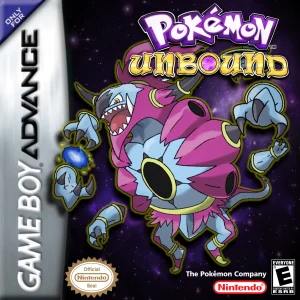
Pokémon Unbound Review: Is It Worth Playing?

Pokémon Unbound is absolutely worth playing, especially if you want a ROM hack that feels more like a completely new Pokémon game than a modified version of FireRed. It features an original region, a new story, modern battle mechanics, difficulty options, side missions, character customization, extensive postgame content, and one of the most technically impressive battle engines found in a Game Boy Advance hack.
That does not mean Pokémon Unbound is the perfect choice for everyone. Its story is more dramatic than a typical Pokémon adventure, some puzzles can slow down the pacing, and its higher difficulty settings expect considerably more preparation than the official games. It is also a very large game, so players looking for a short and simple trip through a familiar region may prefer a smaller enhancement hack.
For most Pokémon fans, however, Unbound is one of the easiest ROM hacks to recommend. It offers enough guidance and difficulty customization for newcomers while giving experienced players the team-building tools and challenging battles they often want from a fan-made game.
Quick Verdict: Is Pokémon Unbound Worth Playing?
Yes. Pokémon Unbound is worth playing for anyone who wants a full-length Pokémon adventure with an original region and modern mechanics.
Rather than sending you through Kanto again, Unbound takes place in the Borrius region, which includes snowy mountains, deserts, forests, caves, cities, ruins, and other environments built specifically for the hack. Its central story follows the player’s conflict with an organization known as the Shadows and a larger threat connected to Borrius’s past.
The game also includes four difficulty settings, dynamic trainer levels, a mission system, Max Raid-style encounters, New Game Plus, a large postgame, and battle mechanics adapted from later Pokémon generations. The official PokéCommunity thread currently lists version 2.1.1.1 as the completed main release, with the main story and battle engine marked complete and the postgame listed as mostly complete.
Pokémon Unbound at a Glance
| Feature | What to Expect |
|---|---|
| Base game | Pokémon FireRed for the Game Boy Advance |
| Region | Borrius |
| Main focus | Original story, exploration, missions, and challenging battles |
| Difficulty | Vanilla, Difficult, Expert, and Insane |
| Pokémon | Species from multiple generations |
| Battle mechanics | Modernized mechanics built into a GBA engine |
| Side content | Missions, raids, collectibles, puzzles, and optional areas |
| Postgame | Additional story content, legendary encounters, facilities, and missions |
| Best suited for | Players wanting a large, modern-feeling Pokémon adventure |
| Less suited for | Players wanting a short, simple, or completely traditional experience |
Pokémon Unbound’s greatest strength is how complete it feels. Many ROM hacks excel in one area, such as difficulty, story, exploration, or mechanical improvements. Unbound combines all of these into one cohesive game.
What Pokémon Unbound Changes From FireRed
Calling Pokémon Unbound a FireRed modification undersells how much it changes. FireRed supplies the underlying GBA foundation, but Unbound replaces Kanto with an original region, introduces a separate cast and story, and substantially expands the mechanics available to the player.
A Completely New Region
Borrius is not simply Kanto with different dialogue or rearranged routes. It is a custom region with its own geography, settlements, dungeons, history, villains, Gym Leaders, and progression.
The adventure begins in the cold northern reaches of the region before opening into a much wider journey. Borrius includes varied environments and considerably more involved dungeons than those found in the original FireRed.
This makes exploration one of the game’s main attractions. Towns frequently contain optional characters, missions, items, or mechanics worth investigating. Players accustomed to running directly from one Gym to the next may miss a significant portion of the game.
An Original Story
Pokémon Unbound tells a more elaborate story than the official Game Boy Advance games. Borrius previously fought a war against Kalos, during which a dangerous force was summoned and eventually sealed away. In the present, the Shadows attempt to unleash that power again.
The plot is more serious than the usual “defeat the criminal team and become Champion” structure. It includes ancient conflicts, family relationships, betrayals, supernatural threats, and several long story sequences.
Players can also choose between lighter and darker story presentations. The official game thread describes the darker option as following the same general plot with more violence and a harsher tone, though without graphic blood.
The story is ambitious, although it will not appeal equally to everyone. Some players enjoy the larger stakes and more prominent characters. Others may find certain scenes overly dramatic compared with the quieter style of official Pokémon games.
Modern Pokémon and Battle Mechanics
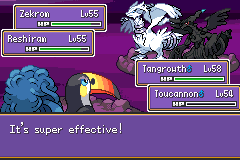
Unbound’s battle engine brings many later-generation features into a GBA game. Its mechanics extend well beyond what was available in the original FireRed, including the physical and special attack split, modern moves, updated abilities, reusable TMs, advanced battle AI, and later-generation battle systems.
The game uses a Black and White-style scaled experience formula. Lower-level Pokémon gain more experience when defeating stronger opponents, while overleveled Pokémon receive less. The Exp. Share is enabled by default but can be changed through the options.
These systems make it much easier to build and maintain a full team than in the original GBA games. You are encouraged to experiment instead of relying on one overleveled starter for the entire adventure.
Missions and Optional Content
Borrius contains a formal mission system that tracks side quests separately from the main story. The current Unbound wiki lists 84 missions, including 27 that become available after entering the postgame.
Missions range from brief errands to larger objectives involving exploration, battles, collectibles, minigames, or hidden areas. Rewards may include useful items, Pokémon, upgrades, or access to additional features.
The mission log is one of Unbound’s best additions because it gives optional content more structure. Instead of relying entirely on memory or checking every NPC repeatedly, you can review active objectives and return to unfinished tasks later.
Character Customization
Unbound allows you to customize your player character instead of locking you into the standard FireRed protagonist. It is not a mechanically important feature, but it contributes to the feeling that this is a separate Pokémon game rather than another journey through Kanto.
More Demanding Boss Battles
Gym Leaders and other major opponents are built around more deliberate strategies than most official-game trainers. Depending on the selected difficulty, bosses may use weather, terrain, held items, coverage moves, status effects, switching strategies, or unusual battle rules.
The result is that team composition matters more. A Pokémon that looks perfect based purely on type advantage may struggle against a boss designed to counter obvious solutions.
Is Pokémon Unbound Good for Beginners?
Pokémon Unbound is a good first ROM hack, but new players should choose their settings carefully.
Someone familiar with the official Pokémon games should be comfortable with Unbound on Vanilla difficulty. The game explains most of its important systems, provides useful NPCs, and includes enough quality-of-life features that building a functional team does not require expert competitive knowledge.
The official difficulty guidance describes Vanilla as being closer to a normal Pokémon game and appropriate for players who want to overlevel or progress without worrying heavily about battles. Difficult is intended for players who want something slightly harder and are comfortable losing an occasional boss fight before adjusting their strategy.
Complete beginners may still encounter a few obstacles:
- Some dungeons contain more complicated puzzles than official Pokémon games.
- Trainer levels can react to the strength of your team.
- Bosses may use battle gimmicks that prevent simple type-based strategies.
- The number of options, missions, Pokémon, and mechanics can feel overwhelming.
- The story and routes are substantially longer than FireRed.
None of these are reasons to avoid the game. They simply mean that new players should not begin on Expert or Insane because those modes sound more exciting.
Unbound is beginner-friendly when played as an adventure. It becomes much less beginner-friendly when treated as a difficulty hack.
Difficulty, Settings, and the Best First-Playthrough Setup
Pokémon Unbound offers four main difficulty settings: Vanilla, Difficult, Expert, and Insane. The correct choice depends more on your experience with difficult ROM hacks than your experience with ordinary Pokémon games.
Vanilla
Vanilla is the best choice for players who primarily want to experience the region, story, missions, and exploration.
Battles are closer to the difficulty of official Pokémon games, and you have more freedom to use favorites without constructing every team around specific bosses. Vanilla is also the safest recommendation for someone playing their first ROM hack.
Choose Vanilla when:
- You rarely play competitive Pokémon.
- You prefer using your favorite Pokémon over optimizing a team.
- You do not want to rebuild your team for major battles.
- You mainly care about the story and exploration.
- You are unfamiliar with abilities, natures, EVs, or advanced movesets.
Difficult
Difficult is the best overall setting for an experienced Pokémon player’s first Unbound playthrough.
It raises the challenge without turning every important battle into a team-building puzzle. Bosses can punish weak preparation, but you generally do not need a fully optimized competitive team.
The official description says Difficult is designed for players who want something harder than a normal Pokémon game and do not mind losing a boss battle once or twice before reconsidering their strategy.
Choose Difficult when:
- You have completed several official Pokémon games.
- You understand type coverage and basic team roles.
- You want Gym Leaders to feel threatening.
- You are willing to adjust moves or team members occasionally.
- You want challenge without extensive EV training.
Expert
Expert assumes considerably stronger team-building knowledge. Although experienced players can complete it on a first run, it is not the most natural way to learn Borrius.
The mode becomes especially demanding later in the game. You may need to pay closer attention to EVs, held items, abilities, natures, and the specific rules of boss encounters.
Choose Expert when:
- You regularly play difficulty hacks.
- You enjoy building teams specifically for boss fights.
- You understand EV training and competitive movesets.
- Losing and changing your approach is part of the fun.
- You do not mind consulting documentation.
Insane
Insane is intentionally extreme. The official thread describes it as the hardest mode and warns that it was designed to be unpleasant for most players. Trainer-battle item use is restricted, and bosses use highly optimized teams with competitive movesets and full EV investment.
Insane should generally be saved for a replay. Starting with it can turn the game into a sequence of matchup problems before you understand the region, available encounters, or boss mechanics.
Recommended Settings for Most First-Time Players
For a player who has completed several Pokémon games but has never played Unbound, this is the strongest starting setup:
| Setting | Recommendation |
|---|---|
| Difficulty | Difficult |
| Experience setting | Capped Share |
| Battle style | Set for more challenge; Switch for a more relaxed run |
| Story tone | Light unless you specifically want a darker presentation |
| Save prompts | Enabled |
| Alternate modes | Disabled |
| Randomizer | Disabled |
| Sandbox mode | Disabled |
Capped Share applies a level cap through the experience settings and helps prevent one Pokémon from pulling far ahead of the rest of the team. The setting can be found under the Battle Options portion of the options menu.
Vanilla with the standard Exp. Share is a better combination for younger players or anyone primarily interested in the story.
Avoid using a randomizer, Scalemons, or other alternate mode for your first playthrough. They may be entertaining later, but the standard game is already designed around a very large selection of Pokémon and carefully constructed progression.
How Long Pokémon Unbound Takes to Beat
Pokémon Unbound is considerably longer than FireRed, but the exact playtime depends heavily on difficulty, exploration, missions, team building, and emulator speed-up.
A reasonable first-playthrough estimate is:
| Playstyle | Approximate Time |
|---|---|
| Main story with limited optional content | 30–45 hours |
| Main story with regular missions and exploration | 45–70 hours |
| Main story and substantial postgame content | 70–120 hours |
| Completion-focused playthrough | 150 hours or more |
These are practical ranges rather than an official completion time. Community playtimes vary enormously: some players report reaching the main ending quickly, while others spend well over 100 hours before or shortly after the Pokémon League because they complete missions, build large teams, search with the DexNav, or explore every available area.
Difficulty also affects the total. On Vanilla, most players can progress without stopping for extensive preparation. On Expert or Insane, training replacements, adjusting movesets, collecting items, and retrying bosses can add dozens of hours.
Unbound is not a game that needs to be rushed. Many of its best features are optional, and ignoring every side path removes part of what makes the hack special.
What to Know Before Starting Pokémon Unbound
Do Not Train Only One Pokémon
Trainer scaling considers the strength of your party. Major opponents may scale around your strongest Pokémon, while the game also uses thresholds to determine which party members affect the calculation. The official FAQ specifically warns that attempting to power through the game with a single overleveled Pokémon can work against you.
Maintain a balanced team rather than allowing your starter to outlevel everything else.
Explore Towns Carefully
Useful NPCs, missions, mechanics, and items are frequently placed in houses or optional corners of towns. Speaking to everyone is more valuable in Unbound than in many official games.
An NPC who appears unimportant may provide a mission, upgrade, move, item, or explanation for a system that becomes useful later.
Use the Mission Log
The mission log is not merely a list of optional chores. It helps you track significant side content and can provide information about collectibles after you discover them.
You do not need to complete every mission immediately. Accept them as you encounter them, then revisit unfinished objectives when the required areas or abilities become available.
Read the Options Menu
Unbound contains far more settings than a normal GBA Pokémon game. The official FAQ notes that additional option pages are accessed with the L and R buttons.
Review the menus early. Exp. Gain, battle style, button behavior, text options, save prompts, and other settings can substantially improve the experience.
Expect Puzzle-Based Gyms and Dungeons
Some major battles and areas are built around environmental mechanics rather than straightforward type matchups. When a Gym introduces unusual weather, terrain, visibility, or battle rules, treat the mechanic as part of the puzzle.
Trying to overpower every gimmick may be harder than adapting to it.
Keep Multiple Save Backups
Use normal in-game saves and keep backup copies of your save file, especially before updating the game or moving between emulators.
Do not rely exclusively on save states. Emulator save states can become incompatible after changing emulator versions or updating the patched game, while a normal in-game save is usually easier to transfer.
Avoid Cheats on an Important Save
Pokémon Unbound heavily modifies FireRed’s code, data, items, encounters, and progression. Cheats made for an unmodified FireRed ROM may write incorrect values or corrupt parts of the save.
Even a cheat that appears to work initially can interfere with missions, key items, encounters, or story flags. Back up your save before experimenting with any cheat code.
Pros and Cons
Pros
It feels like a new Pokémon game.
Borrius, its characters, its story, and its progression are original enough that Unbound rarely feels like a reskinned FireRed.
The difficulty is highly customizable.
Vanilla allows players to enjoy the adventure casually, while Expert and Insane provide meaningful challenges for players who enjoy advanced team building.
Modern mechanics improve team variety.
Updated moves, abilities, the physical-special split, modern experience systems, and broad Pokémon availability make a wider range of teams practical.
There is a huge amount of optional content.
Missions, collectibles, raids, minigames, postgame areas, legendary encounters, and battle facilities can keep a single save active long after the Pokémon League.
Quality-of-life features respect the player’s time.
Team training, mission tracking, reusable resources, navigation tools, and extensive options reduce much of the friction associated with older Pokémon games.
The presentation is unusually polished for a GBA hack.
Custom environments, interfaces, music, effects, and character options help distinguish Unbound from its FireRed foundation.
Cons
The story can feel overly dramatic.
Players who prefer the understated storytelling of early Pokémon games may find some characters or scenes excessive.
Some puzzles interrupt the pace.
Dungeons and Gym challenges can be more complicated than expected, particularly for players who primarily want battles.
The amount of content can be overwhelming.
New players are introduced to numerous mechanics, missions, encounters, and customization options in a relatively short period.
Dynamic scaling is not universally appealing.
Players who enjoy freely overleveling may dislike opponents reacting to the strength of their party.
Higher difficulties can restrict team freedom.
Expert and Insane may force players to use particular counters or rebuild around individual bosses.
Not every portion of the postgame is equally complete.
The official thread describes the main story and battle engine as complete but still identifies some missing or unfinished postgame content.
Is Pokémon Unbound Good for Nuzlockes?
Pokémon Unbound can be excellent for a Nuzlocke, but it is better suited to experienced challenge players than first-time Nuzlockers.
The large encounter pool creates meaningful team variety, while the difficulty modes allow you to choose how punishing the run should be. Level-cap options are also built directly into the game, removing the need to track every cap manually.
However, Unbound presents several Nuzlocke complications:
- Bosses may use unusual battle rules or field effects.
- Dynamic scaling makes overleveling less useful.
- Blind players can lose Pokémon to unexpected coverage moves.
- Some routes and caves contain dangerous encounters.
- Expert and Insane bosses are designed around optimized strategies.
- Puzzle mechanics can affect battles in ways that are not obvious beforehand.
Vanilla is appropriate for a casual blind Nuzlocke. Difficult is the best choice for experienced Nuzlocke players who still want flexibility. Expert should usually be attempted with documentation, while Insane is closer to a specialized challenge run than a normal Nuzlocke.
For a first experience with Unbound, complete a regular playthrough before imposing permanent-death rules. The game is large enough that losing a run late can mean sacrificing dozens of hours, and many of its most memorable battles are more enjoyable once you understand their mechanics.
Who Should Play Pokémon Unbound?
You should play Pokémon Unbound when you want:
- A full original region instead of another Kanto playthrough.
- A longer Pokémon game with substantial side content.
- Modern battle mechanics on a GBA-style engine.
- Difficulty settings that range from relaxed to extreme.
- A wide selection of Pokémon and viable team options.
- Structured missions and rewarding exploration.
- A serious story with larger stakes.
- A postgame that can support many additional hours of play.
You may want to skip it when you want:
- A short game that can be completed in a weekend.
- A completely traditional Generation III experience.
- Minimal dialogue and a simple story.
- Straightforward routes without involved puzzles.
- A difficulty hack focused almost exclusively on boss battles.
- A familiar-region enhancement rather than an original adventure.
Players looking for something shorter and more traditional may prefer an enhancement hack. Players looking for pure competitive difficulty may prefer a hack built entirely around difficult battles. Unbound’s strength is combining story, exploration, challenge, and optional content rather than specializing in only one of them.
Final Recommendation
Pokémon Unbound is one of the strongest starting points for anyone interested in Pokémon ROM hacks.
It demonstrates how far a FireRed-based project can move beyond the original game. Borrius feels distinct, the battle engine supports modern strategies, the mission system rewards exploration, and the difficulty options make the same adventure accessible to several different types of players.
Its size is both an advantage and a warning. This is not a lightweight hack designed for a quick nostalgia trip. It asks for more time, introduces more mechanics, and occasionally expects more patience than an official Pokémon game.
Start on Vanilla when you want a relaxed adventure. Choose Difficult when you already understand Pokémon fundamentals and want bosses to push back. Save Expert and Insane for players who enjoy planning, optimization, and repeated attempts.
For most players, the answer is simple: Pokémon Unbound is worth playing. It is especially worthwhile when you want a ROM hack that can stand on its own as a complete Pokémon adventure rather than merely improving a game you have already finished.